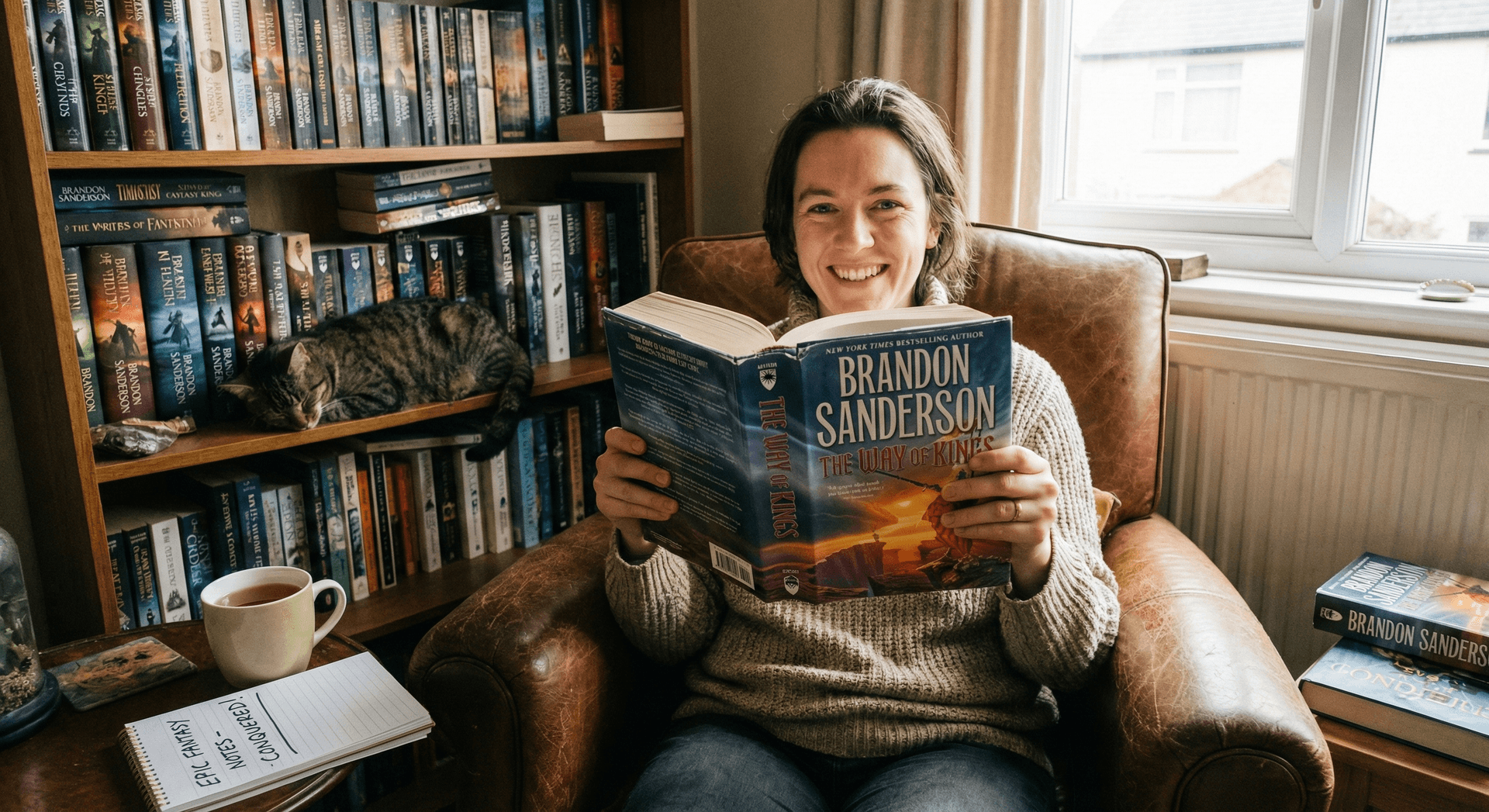
I have a confession to make. For years, I was terrified of epic fantasy. Not because of the dragons or the magic systems—those sounded amazing. I was terrified of the commitment. You're telling me this series is fourteen books long, each one the size of a brick, with appendices and maps and supplementary novellas? My TBR pile was already out of control.
But then I actually dove in. And now I'm the person who gets unreasonably excited about thousand-page fantasy novels and knows the publication order of Brandon Sanderson's entire Cosmere by heart. What changed? I learned that tackling epic fantasy isn't about conquering everything at once—it's about knowing where to start and how to approach these massive worlds.
Understanding Epic Fantasy Architecture
The first thing I learned is that not all epic fantasy is structured the same way. Understanding what you're getting into makes the whole endeavor less intimidating.
Linear Series
These are the most straightforward: start at book one, finish at book whatever. The Wheel of Time, The Stormlight Archive, A Song of Ice and Fire—these tell one continuous story across multiple volumes. You can't really skip around.
Shared World Series
This is where it gets interesting. Some fantasy authors create entire universes with multiple entry points. Brandon Sanderson's Cosmere is the ultimate example—it includes Mistborn, Stormlight Archive, Elantris, and more, all set in the same fictional universe with subtle (and not so subtle) connections.
Terry Pratchett's Discworld is another famous example. Forty-one books in the same world, but you can start at multiple different entry points depending on what kind of story appeals to you.
Branching Series
These start with a main series, then spawn spinoffs featuring different characters in the same world. You want to read the main series first, then branch out based on which characters grabbed you.
My Personal Strategy for Epic Fantasy
After years of building reading order guides for fantasy series, here's the approach I recommend:
1. Accept That You Don't Need to Read Everything
This was the biggest mindset shift for me. Yes, Brandon Sanderson has written millions of words. No, you don't need to read all of them to enjoy Mistborn. Start somewhere. See if you like it. Expand from there if you want to.
2. Pick Your Entry Point Based on Your Preferences
Not all fantasy is the same. Ask yourself:
- Do you want political intrigue? Try A Song of Ice and Fire
- Do you want intricate magic systems? Try Mistborn
- Do you want character-driven stories? Try The Realm of the Elderlings
- Do you want lighter, funnier fantasy? Try Discworld
- Do you want grimdark moral complexity? Try The First Law
3. Use Reading Guides
This is literally why I built this website. Complex fantasy worlds need roadmaps. When I was starting the Cosmere, having a clear reading order saved me so much confusion about what to read and when.
My Favorite Fantasy Series (With Starting Points)
For First-Time Fantasy Readers
Mistborn: The Final Empire by Brandon Sanderson. It's a complete trilogy with a satisfying ending. The magic system is clearly defined. The pacing is accessible. If you like it, there's SO much more Sanderson to explore.
For Character-Driven Readers
Assassin's Apprentice by Robin Hobb. The Realm of the Elderlings is one of the most emotionally devastating fantasy series ever written, in the best way. Start with the Farseer Trilogy and let Fitz absolutely wreck you.
For "I Want the Challenge" Readers
The Eye of the World by Robert Jordan. The Wheel of Time is fourteen books of epic, sprawling, world-building fantasy. It's a commitment. It's also considered one of the greatest fantasy series ever written. I maintain it's worth every page, even the slower middle books.
For Readers Who Want Something Different
The Lies of Locke Lamora by Scott Lynch. Fantasy heist fiction. It's like Ocean's Eleven in a Renaissance-inspired fantasy city. Absolutely delightful.
The Joy of Reading Notes
Here's something I wish someone had told me earlier: it's okay to take notes when reading epic fantasy. There are a lot of characters. There's a lot of world-building. Jotting down names and relationships isn't cheating—it's just practical.
Our reading tracker has a notes feature specifically for this. When you're juggling the seventeen noble houses of Westeros, having a quick reference helps.
Why I Keep Coming Back to Fantasy
After all these years and all these books, epic fantasy remains my favorite genre. There's something magical about immersing yourself in a fully realized world. The best fantasy series don't just tell stories—they create places you want to live in, histories you want to study, magic systems you want to understand.
Yes, the commitment is real. But so is the payoff.
Search for any fantasy series on this site to find the exact reading order. I've done the research so you can dive in with confidence.
May your journey through imaginary worlds be long and wondrous.
— mrod