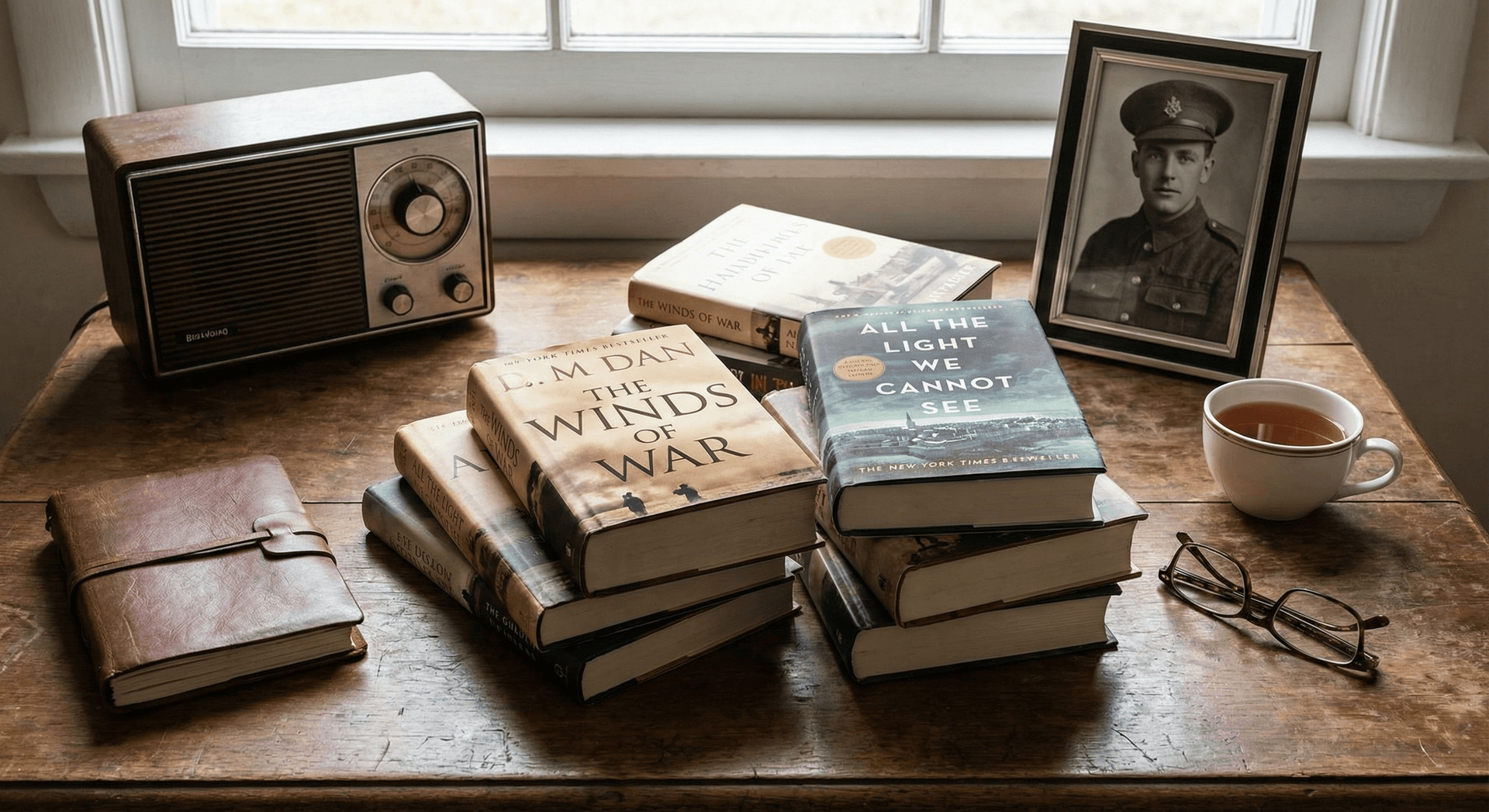
I've read more WWII historical fiction than I can count, and I've become somewhat picky about it. The war produced so much drama, heroism, and tragedy that it's a natural setting for fiction, but that same richness makes it easy for writers to fall into lazy clichés or historical inaccuracies that pull me out of the story.
The series I recommend below get the details right without letting historical accuracy overwhelm the human story. They respect the real experiences of people who lived through the war while telling compelling fictional narratives. That's harder to achieve than it sounds.
What Makes WWII Historical Fiction Work
Before we get to the recommendations, let me share what I look for:
Historical Accuracy That Serves the Story
The best historical fiction researches deeply but wears that research lightly. I want to learn something, but I don't want to feel like I'm reading a textbook. The historical details should create atmosphere and context, not interrupt the narrative for fact dumps.
Perspectives Beyond the Obvious
The WWII canon is dominated by certain perspectives: American soldiers, British civilians, concentration camp survivors. These stories deserve telling, but I'm particularly drawn to fiction that explores lesser-known experiences: Resistance fighters, women on the home front, occupied countries, even German civilians who had complicated relationships with the Nazi regime.
Emotional Truth
War is traumatic, and fiction that glosses over that trauma feels dishonest. But wallowing in suffering isn't honest either. The best WWII fiction finds moments of hope, connection, and even humor within the darkness—because real people living through the war found those moments too.
The Series That Deliver
The Century Trilogy by Ken Follett
Follett follows five families—American, German, Russian, English, and Welsh—through the great events of the 20th century. The middle book, Winter of the World, covers the war years brilliantly, showing how the conflict affected people on all sides. Follett's research is impeccable, and his ability to make history feel immediate is unmatched.
What makes it special: You experience the war from so many angles that your understanding of it fundamentally shifts.
Maisie Dobbs by Jacqueline Winspear
While Maisie Dobbs is primarily set in the interwar period, WWI's shadow hangs over every book, and later entries deal directly with the lead-up to and early years of WWII. Maisie is a psychologist and investigator whose cases inevitably connect to the trauma and upheaval of the era.
What makes it special: The focus on psychological and emotional aftermath, not just the events themselves.
The Maggie Hope Series by Susan Elia MacNeal
Maggie Hope is an American working in Churchill's government who gets drawn into espionage. The series covers various aspects of the war—the Blitz, Bletchley Park, occupied Paris—through a protagonist who's smart and capable without being superhuman.
What makes it special: Strong female protagonist doing important wartime work without the anachronistic "girl boss" treatment.
Billy Boyle by James R. Benn
An Irish-American Boston cop becomes an investigator for General Eisenhower, solving murders against the backdrop of the war's major campaigns. Benn clearly loves his research, and each book puts Billy in a different theater or situation (North Africa, D-Day, concentration camps).
What makes it special: The mystery plots give structure while the historical settings provide depth.
The Bess Crawford Series by Charles Todd
Technically WWI, but too good to omit. Bess is a nurse on the Western Front who encounters mysteries while tending wounded soldiers. The mother-son writing team captures the war's horror while honoring the courage of those who served.
Individual Novels That Deserve Series Treatment
Some of the best WWII fiction comes in standalone form: All the Light We Cannot See, The Nightingale, The Book Thief, The Tattooist of Auschwitz. These are frequently recommended and deserve their praise.
A Note on Responsibility
WWII fiction carries a particular responsibility because the events are still within living memory for some survivors, and the war's lessons remain relevant. The best WWII fiction honors the real experiences it draws from while telling fictional stories that help readers understand what was at stake.
The worst exploits tragedy for entertainment without acknowledging the real human cost. I try to recommend books that take their subject seriously, even when they're telling exciting adventure stories.
— mrod