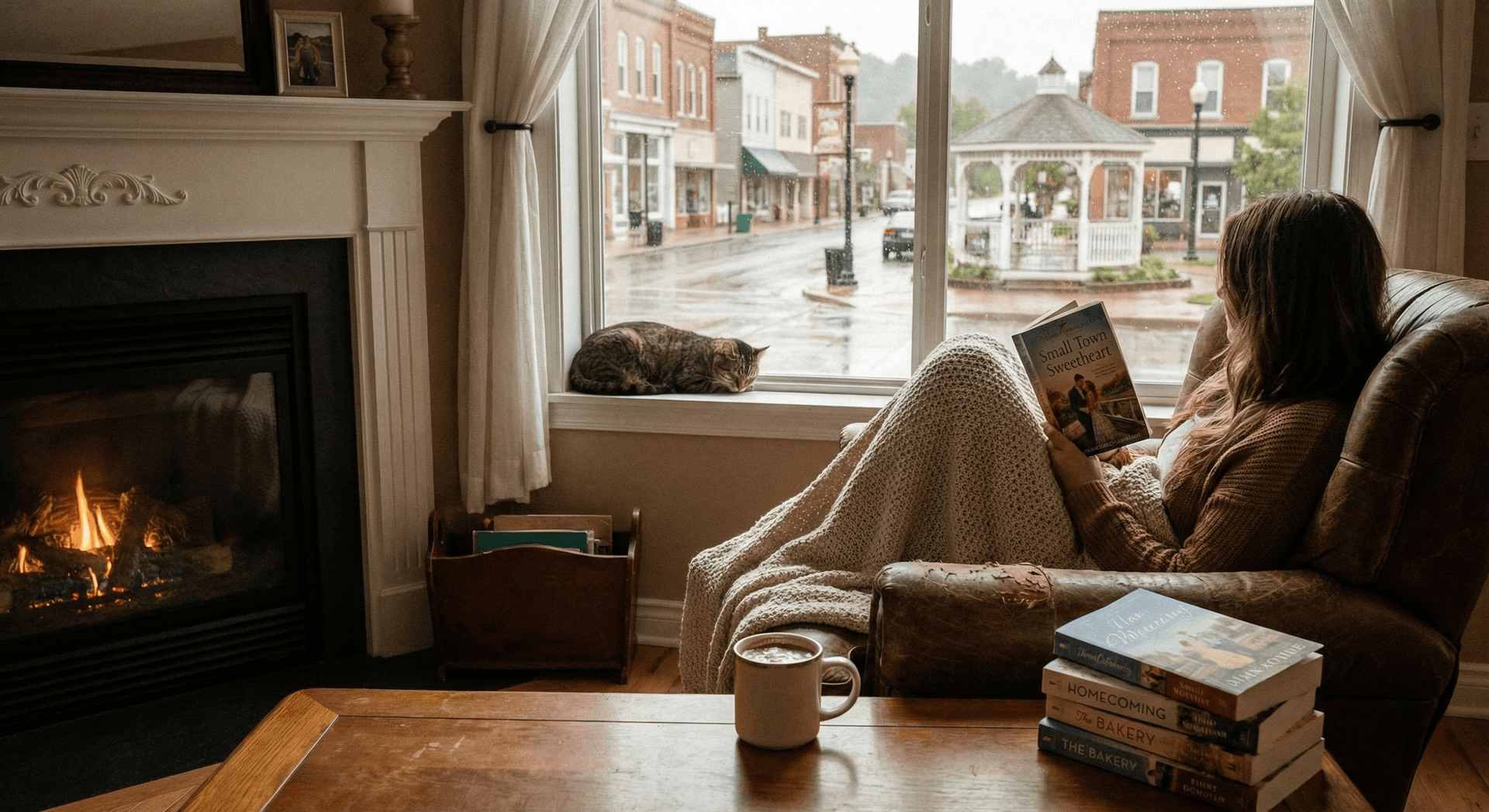
I live in a city. I have always lived in cities. I like anonymity, good coffee, late-night options, and not knowing my neighbors. So why can't I stop reading romance novels set in tiny towns where everyone knows everyone and the local diner is the social hub?
Small town romance has become my permanent comfort genre, and I've spent some time thinking about why. It's not nostalgia for a life I've never lived. It's something else—something about community, belonging, and the fantasy of being truly known.
The Small Town Fantasy
Small town romance sells a fantasy, but it's not the fantasy I expected. It's not about simple living or escaping technology or returning to traditional values. The fantasy is about community—about a place where you matter, where people notice when you're gone, where your problems become everyone's problems because everyone cares.
City life is anonymous by design. That anonymity is valuable—you can reinvent yourself, escape judgment, live without surveillance. But it can also be lonely. Small town romance offers the opposite: a place where you're known completely and loved anyway.
The Tropes That Make It Work
The Return
A character who left for the big city returns home, often reluctantly. They have to confront their past, reconnect with their roots, and realize that the thing they ran from might be the thing they need. This arc resonates because many of us have complicated relationships with where we come from.
The Outsider
Someone arrives in town from elsewhere and has to earn their place. The community is initially suspicious but gradually accepts them. The romance often involves a local showing the outsider what's worth loving about this place.
The Feud
Two families or businesses have beef going back generations. The protagonists fall in love across enemy lines. Small towns have long memories, and conflict that would dissipate in a city stays fresh in a place where you see your rivals every day.
The Meddling Community
Everyone has opinions about the romance and isn't shy about sharing them. This can be played for comedy (the matchmaking grandmothers) or drama (the disapproving patriarch), but either way, the relationship isn't private—it's a community event.
Series That Deliver
Virgin River by Robyn Carr
The series that launched a Netflix show follows multiple couples in a small Northern California town. Carr has written dozens of books in this setting, and the community itself becomes a character you look forward to returning to.
Chesapeake Shores by Sherryl Woods
Another series that became a TV show, following the O'Brien family in a Maryland coastal town. Woods is the master of small-town family drama, and her series reward long-term investment.
Sweetwater Springs by Annie Rains
A North Carolina mountain town serves as the setting for multiple interconnected romances. Rains writes comfort with a capital C—these are books you read when you need everything to be okay.
The Bennet Brothers by Megan Squires
A small-town mechanic shop staffed by brothers who all find love. The family dynamics are as satisfying as the romances.
Why It's Comfort
Small town romance works as comfort reading because it's fundamentally optimistic about human nature. In these books, people are basically good. Communities take care of their members. Problems can be solved with honesty and effort. Love triumphs because everyone involved is trying their best.
That's not realistic, exactly, but it's hopeful. And sometimes hope is what you need.
— mrod