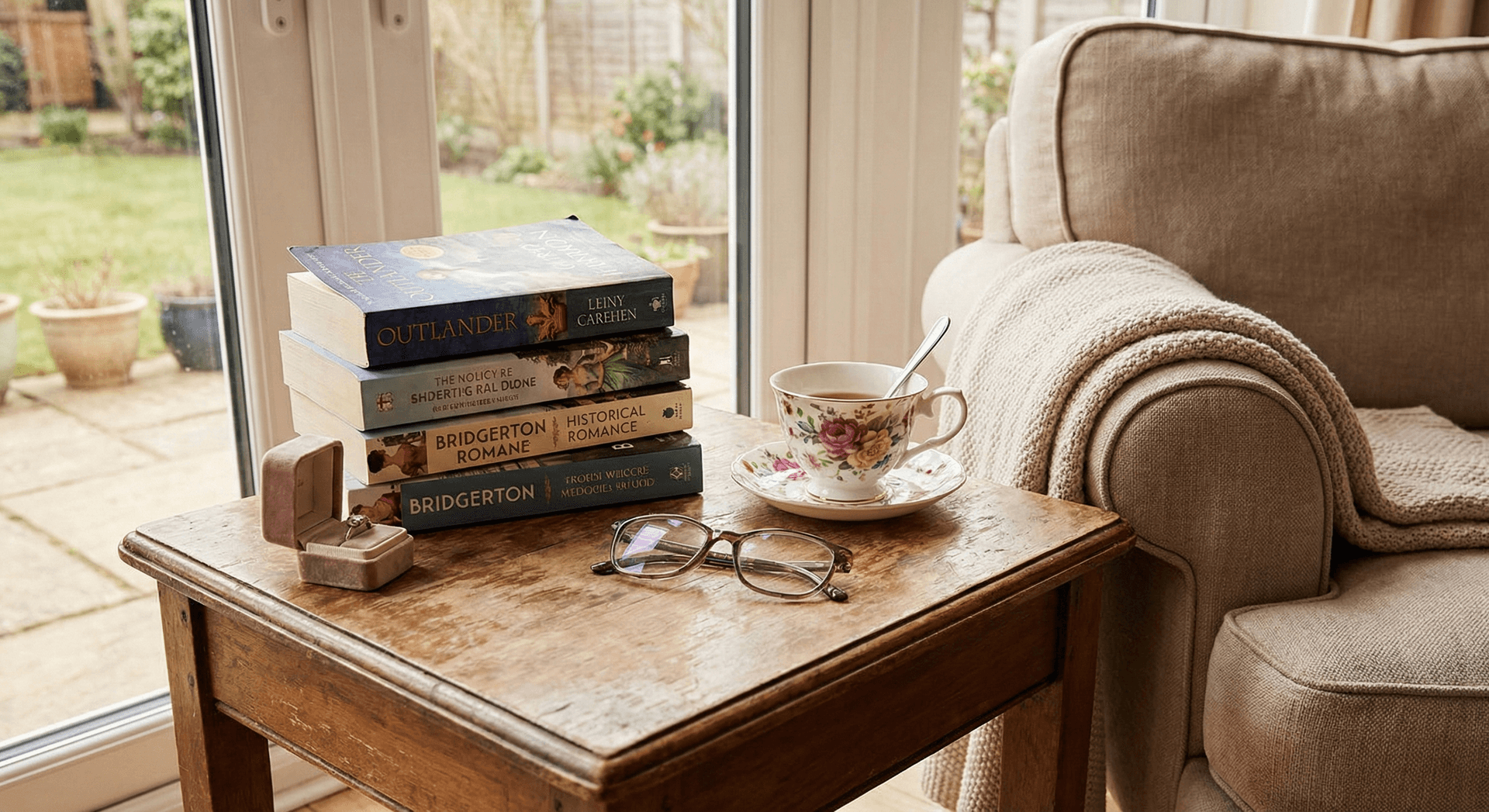
There's a moment in every great historical romance where the setting stops being backdrop and becomes its own character. Where you can smell the beeswax candles in the ballroom, feel the weight of the corset, hear the whispered gossip behind fans. That's the moment I live for—the moment when a book doesn't just tell you about history but transports you into it.
I came to historical romance relatively late in my reading journey. For years, I was strictly a contemporary romance reader. Modern settings, modern problems, modern sensibilities. Then a friend shoved a Julia Quinn novel into my hands and said, "Trust me." Three days later, I emerged from a Bridgerton-induced haze having read four books and ordered the complete series. I've been hooked ever since.
What converted me wasn't the pretty dresses or the fancy titles—though I won't pretend those aren't fun. It was the realization that historical romance offers something contemporary romance can't quite replicate: constraint as a source of tension. When every interaction is governed by rules, when a single unchaperoned conversation can ruin a reputation, when touching bare hands is scandalous—every moment carries weight. The slow build becomes inevitable, and the payoff is immense.
Understanding Historical Romance Eras
Before I dive into specific recommendations, let me orient you to the landscape. Historical romance spans literally thousands of years, but certain eras dominate the genre for good reasons.
The Regency Era (1811-1820)
This is the golden age of historical romance, and it's not hard to see why. Thanks to Jane Austen, we have a cultural familiarity with the period that makes it immediately accessible. We know about balls and the marriage mart, about the ton and the season, about the elaborate rules governing courtship. The Regency offers a perfect combination of enough freedom for romantic tension and enough restriction for delicious conflict.
The fashion is gorgeous. The language is witty. The settings range from glittering London ballrooms to pastoral country estates. And the central conflict—finding a suitable match in a society where marriage determines everything—provides endless story possibilities.
The Victorian Era (1837-1901)
Victorian romance offers something different: a longer timespan with more social variety. The Industrial Revolution transformed society, creating new money and new tensions. Victorian romances can explore class mobility, the clash between old aristocracy and new wealth, and the changing role of women in ways Regency romance typically doesn't.
The tone tends to be somewhat darker and more complex. Victorian heroines often have more autonomy than their Regency counterparts—they might be governesses or nurses or even professionals. The conflicts frequently involve navigating a world that's rapidly changing.
Medieval and Renaissance Periods
Earlier historical periods require more worldbuilding but offer dramatic payoffs. Knights and castles, arranged marriages and political alliances, the clash between duty and desire—these settings provide inherent conflict and high stakes. The historical distance also allows for more creative liberty; readers are generally less likely to notice (or care about) minor anachronisms in periods they're less familiar with.
The Historical Romance Series That Changed My Reading Life
Now for what you came here for: specific recommendations. These are the series I recommend most often, reread most frequently, and think about most obsessively.
The Bridgertons by Julia Quinn
I know, I know—everyone recommends the Bridgertons. But there's a reason for that. Julia Quinn created something special with this eight-book series about the eight alphabetically-named Bridgerton siblings. Each book focuses on a different sibling's romance, but the family as a whole provides continuity and warmth throughout.
What Quinn does brilliantly is balance humor with heart. Her books are genuinely funny—the dialogue sparkles, the situations are often absurd, and the family dynamics are chaotic in the best way. But beneath the wit, there's real emotional depth. These characters have wounds and fears and growth arcs that satisfy.
Start with The Duke and I if you want to go in order (which I recommend), or start with The Viscount Who Loved Me if you want the fan favorite. But really, you can't go wrong with any of them.
The Wallflowers by Lisa Kleypas
Lisa Kleypas is a master of the genre, and the Wallflowers series showcases everything she does well. The premise is simple: four young women who consistently fail to attract suitors form a friendship while sitting out dances at society events. They make a pact to help each other find husbands, and over four books, each wallflower gets her happily ever after.
What makes this series special is the depth of the friendships. The wallflowers genuinely love and support each other, and watching their bond strengthen across books is almost as satisfying as the romances themselves. Kleypas also writes some of the most swoon-worthy romantic scenes in the genre—she earns every emotional beat.
The Brothers Sinister by Courtney Milan
If you want historical romance that feels modern in sensibility while remaining historically grounded, Courtney Milan is your author. The Brothers Sinister series features heroes and heroines who would feel progressive even by today's standards: characters with disabilities, characters challenging gender norms, characters questioning the systems they live within.
Milan does meticulous historical research and then uses that research to tell stories that often center marginalized perspectives. Her characters feel like real people navigating real constraints, and their triumphs feel earned. The Duchess War is a perfect starting point.
The Hathaways by Lisa Kleypas
Another Kleypas series makes the list because she's just that good. The Hathaways follows five siblings—four sisters and a brother—as they navigate Victorian society while being decidedly unconventional. The family is half-Romani, their father was a medieval studies scholar, and none of them quite fit the expected molds.
This series has my favorite Kleypas hero (Cam Rohan, introduced in Mine Till Midnight) and some of her most emotionally complex storylines. The sibling dynamics are fantastic, and the Hampshire estate setting provides wonderful continuity across books.
Why Reading Order Matters in Historical Romance
More than almost any other romance subgenre, historical romance series reward reading in order. Characters from earlier books appear in later ones. The social world expands as you read. Inside jokes and callbacks accumulate. By the time you reach the final book, you're not just reading about two people falling in love—you're witnessing the culmination of an entire community's stories.
I've personally mapped out reading orders for every major historical romance author on this site. Search for your favorites and find the optimal path through their worlds. Because trust me, you don't want to meet a character and realize you should have read their book first.
Welcome to historical romance. Your TBR pile is about to explode.
— mrod