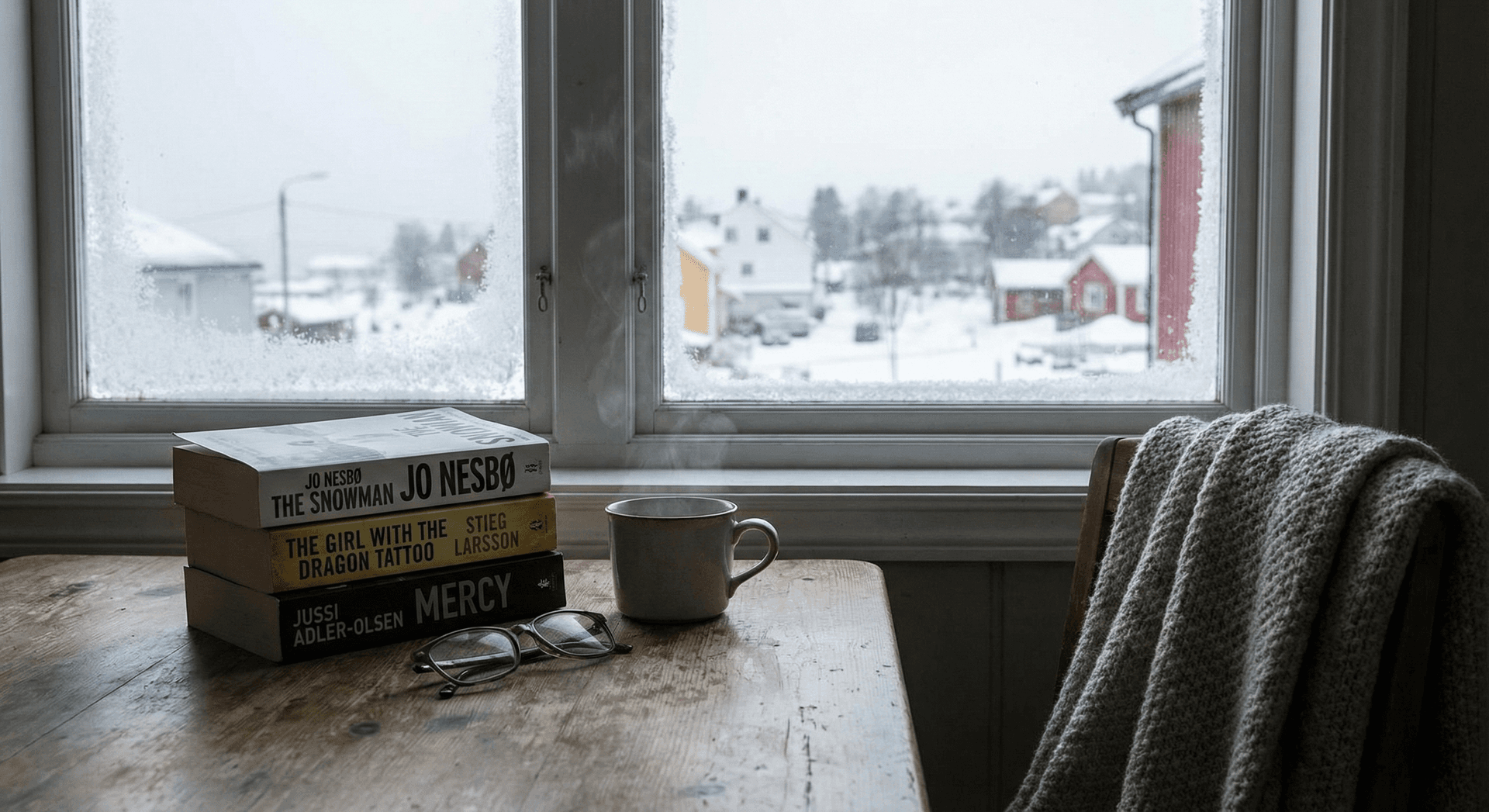
I was a crime fiction snob. I thought the genre was fundamentally puzzle-focused—who did it and how—with character and theme as afterthoughts. Then someone handed me The Girl with the Dragon Tattoo, and I realized I had been reading the wrong crime fiction.
Nordic noir uses crime as a lens to examine society. Murder is the occasion for the story, not the point. These books are about institutional failures, hidden traumas, the darkness beneath civilized surfaces. They're literary fiction that happens to involve investigations.
What Makes Nordic Noir Different
Social Criticism
Nordic crime fiction is often explicitly political. It critiques capitalism, institutional corruption, treatment of women, failures of the welfare state. The crimes are usually symptoms of societal dysfunction, not isolated acts of evil.
Atmosphere Over Action
Nordic noir is often slow, deliberately paced, concerned more with mood than momentum. The Scandinavian landscape—dark winters, isolated towns, cold seas—becomes a character. There are procedural elements, but they're not rushed.
Complex, Flawed Investigators
The detectives in Nordic noir are rarely heroic. They're often dealing with alcoholism, failed relationships, psychological damage. They solve crimes not through genius but through persistence and luck, and solving the crime doesn't fix their problems.
Ambiguous Resolutions
The murderer is usually caught, but that doesn't mean justice is served. The underlying problems that caused the crime remain. The detective is perhaps more damaged than before. Nordic noir doesn't offer the satisfaction of everything wrapping up neatly.
Essential Nordic Noir
The Millennium Trilogy by Stieg Larsson
The book that introduced most Americans to Nordic noir. Journalist Mikael Blomkvist and hacker Lisbeth Salander investigate corporate crime, serial murder, and institutional corruption in Sweden. Larsson died before the first book was published, which adds a tragic dimension to the reading experience.
The Wallander Series by Henning Mankell
Kurt Wallander is a depressed, divorced detective in rural Sweden, solving crimes while his personal life falls apart. Mankell was Larsson's mentor, and his influence on the genre is immense. These books are slower and quieter than Larsson's but equally rewarding.
The Harry Hole Series by Jo Nesbø
Norwegian detective Harry Hole is an alcoholic genius who solves brutal crimes while destroying his own life. Nesbø's plots are intricate and often disturbing, and Harry is one of the great damaged detectives in crime fiction.
The Department Q Series by Jussi Adler-Olsen
Detective Carl Mørck runs a cold case department in the basement of Copenhagen police headquarters. These are more traditionally entertaining than some Nordic noir—there's dark humor and the cold cases are genuinely compelling—while maintaining the genre's social criticism.
Before the Frost by Henning Mankell
Features Linda Wallander, Kurt's daughter, who has just joined the police force. It's a good entry point if you want to try Mankell but feel intimidated by the long Wallander series.
Beyond Scandinavia
The "Nordic" label has expanded to include crime fiction from Iceland (Arnaldur Indridason), Scotland (Ian Rankin, though he predates the trend), and anywhere else that produces dark, socially conscious crime fiction with atmospheric settings.
The genre's influence is visible in crime fiction worldwide now. Slow, atmospheric, socially aware crime novels are no longer a Scandinavian specialty but a global phenomenon.
— mrod