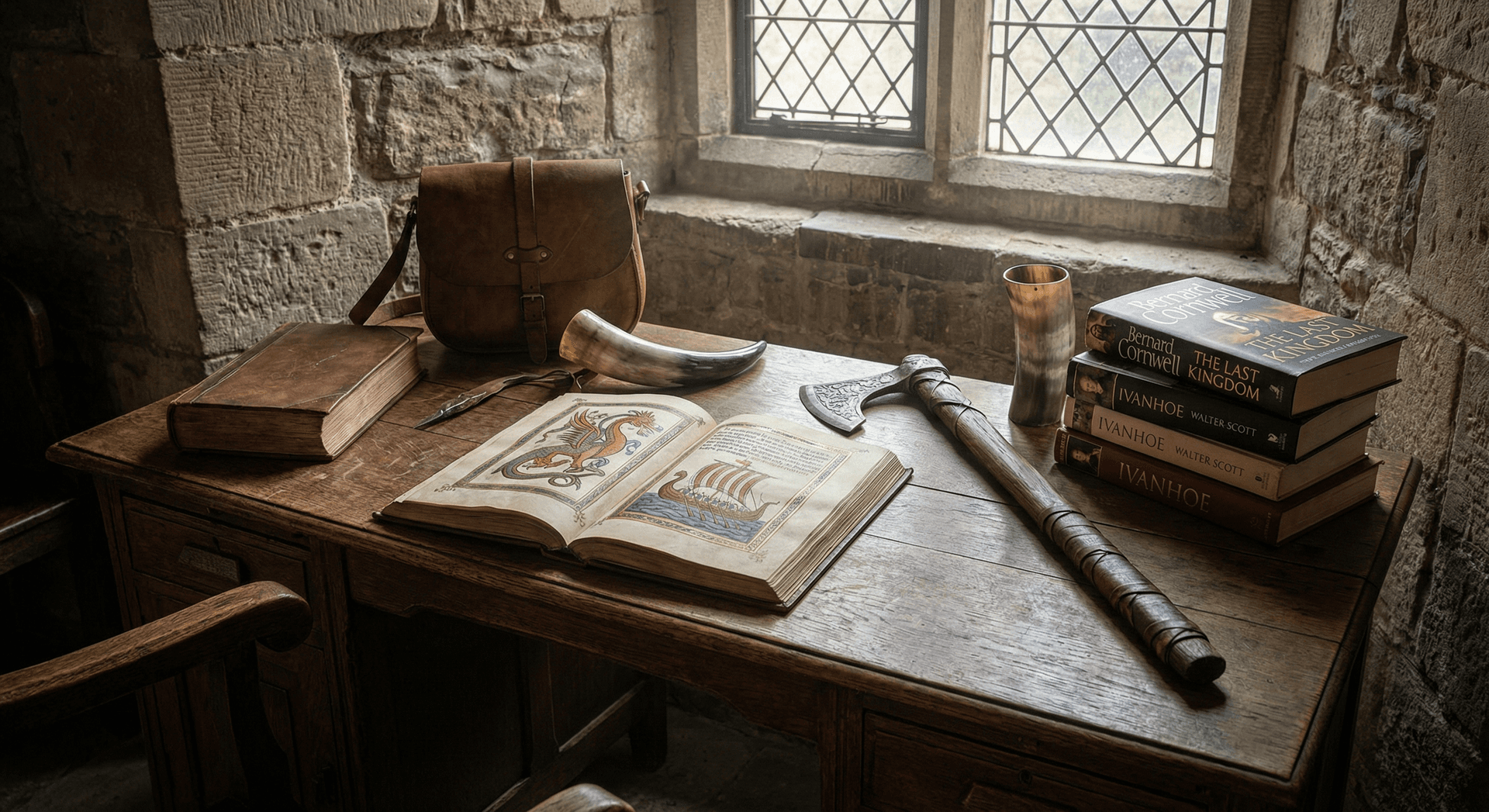
Viking and medieval fiction has exploded in popularity thanks to shows like Vikings and The Last Kingdom, and I'm here for it. These periods have always fascinated me—the clash of cultures, the religious transformations, the genuine strangeness of a world so different from our own.
But popularity has brought a flood of mediocre fiction cashing in on the trend. Not everything with a Viking on the cover is worth your time. Here's what actually is.
What Makes This Era Challenging to Write
Writing authentic medieval or Viking fiction is genuinely difficult. Our sources are limited and biased. The mindset of people in these periods was fundamentally different from ours in ways that can be hard to convey without alienating modern readers. The temptation is to write modern people in funny costumes, which fails.
The series I recommend below manage to make their characters feel genuinely of their time while still being accessible to contemporary readers.
Viking Age Fiction
The Saxon Stories by Bernard Cornwell
Uhtred of Bebbanburg is a Saxon raised by Vikings, torn between two cultures as Alfred the Great tries to unite England. These books inspired The Last Kingdom TV series, and they're exceptional: vivid battle scenes, complex characterization, and a protagonist who grows and ages across the series.
This is my top recommendation for Viking-era fiction. Cornwell at his best.
The Raven Series by Giles Kristian
Follows a young man who joins a Viking warband, rising from thrall to warrior. Kristian's prose is rich with period detail, and he doesn't shy away from the Vikings' brutality while also showing their culture's more appealing aspects.
Half-Drowned King by Linnea Hartsuyker
Based on Norse sagas, following Harald Fair-Hair's unification of Norway. Hartsuyker brings women's perspectives into a traditionally male-dominated narrative, and the family dynamics are as compelling as the battles.
The Long Ships by Frans G. Bengtsson
Written in the 1940s but still fresh, this picaresque follows a Viking named Red Orm through adventures across the known world. It's funnier than most Viking fiction while still being respectful of the period.
Medieval Fiction
The Accursed Kings by Maurice Druon
GRRM called this "the original Game of Thrones," and the comparison is apt. Set in 14th-century France, following the fall of the Templars and the chaos that followed, these novels are political intrigue at its finest.
The Name of the Rose by Umberto Eco
A Franciscan friar investigates deaths at an Italian monastery in 1327. Eco was a semiotician, and the book is as much about language and interpretation as it is about murder, but it's also a genuine page-turner.
The Pillars of the Earth by Ken Follett
Follows the building of a cathedral in 12th-century England through the civil war between Stephen and Maud. It's a doorstop of a book, but the time flies, and Follett makes medieval construction genuinely exciting.
The Cadfael Chronicles by Ellis Peters
Brother Cadfael, a Benedictine monk and former crusader, solves murders in 12th-century Shrewsbury. The mysteries are satisfying and the medieval setting is lovingly rendered.
Reading Order Considerations
Most of these series work fine starting with book one. The exception is Cornwell's Saxon Stories, which really do benefit from being read in order—Uhtred's journey is cumulative, and jumping in mid-series means missing important character development.
The Balance of Accuracy and Readability
Historical fiction always involves compromise between authenticity and accessibility. These periods are remote enough that perfect accuracy would create unreadable texts. The best writers find ways to signal the difference of the past without making it incomprehensible.
Look for fiction that takes its subject seriously—that doesn't anachronistically impose modern values, that acknowledges the period's darkness without wallowing in it—while still telling stories that resonate with contemporary readers.
— mrod